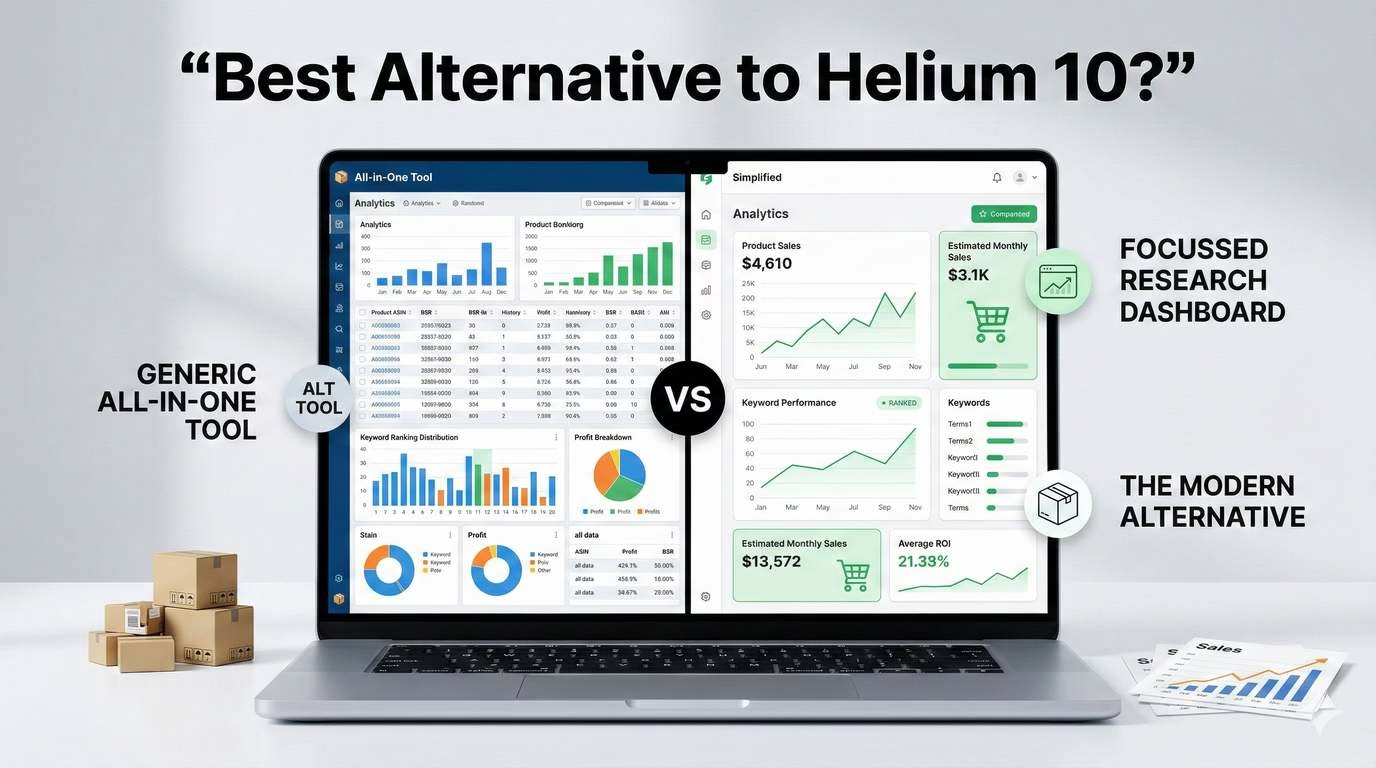
If you’ve searched for the best alternative to Helium 10, you’re not alone. Amazon sellers are getting pickier. Tools are getting pricier. Dashboards are getting busier. And a lot of people are realizing a simple truth.
More features don’t always mean more profit.
Helium 10 is popular for a reason. It’s powerful. It’s packed. It can do a lot. But for many sellers, it also feels like paying for a gym membership with every machine… when you only use the treadmill.
That’s why the hunt for a smarter fit is exploding in 2026. Sellers want clarity. They want speed. They want reliable product research and keyword validation without the overwhelm. And they want to stop bleeding monthly fees before they’ve even found a winning product.
The good news? There are strong alternatives. The right pick depends on your stage, your workflow, and your budget. If you’re early-stage or budget-conscious, tools like AMZScout are getting serious attention because they focus on what most sellers actually need. Product research. Validation. Keywords. Done.
In this guide, I’ll break down why people switch, what matters most in a replacement, and which platforms stand out. No fluff. No fanboy takes. Just a clear, practical comparison you can act on today.
Why Sellers Are Looking for the Best Alternative to Helium 10
Let’s be real. Most sellers don’t wake up wanting to switch tools. Switching is annoying. You have workflows. Saved lists. Muscle memory. But when a tool starts feeling heavy instead of helpful, people move.
Here are the biggest reasons sellers are actively searching for the best alternative to Helium 10.
1) Pricing pressure hits fast
Subscriptions feel small when you’re excited. Then reality shows up.
Monthly costs stack up with every “must-have” tool. And Helium 10 is often priced like an all-in-one suite for brands that are already scaling. That’s great if you’re running a mature operation. Not so great if you’re validating your first few product ideas or launching on a tight budget.
Another problem? Plan ceilings. Entry-level plans can feel restrictive. Advanced plans can feel like overkill. So sellers end up paying more than they want, just to unlock one or two key functions they actually need.
That’s when people start looking around.
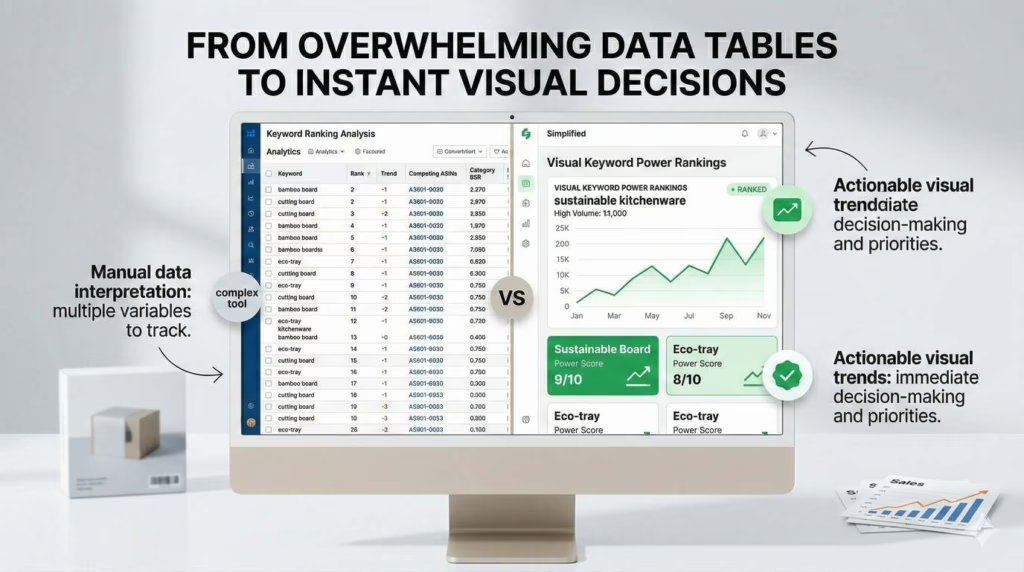
2) The interface can be overwhelming
Helium 10 has a lot going on. For some users, that’s exciting. For others, it’s exhausting.
Feature-heavy dashboards create friction. Every click becomes a choice. Every choice becomes time. And time is the one resource you never get back.
If you’re newer, this is worse. You don’t just need tools. You need guidance. A clean workflow. A simple “do this next” flow. Many sellers switch because they want a platform that feels lighter and faster.
3) Data confidence isn’t always consistent
All Amazon research tools estimate. None of them have perfect access to Amazon’s internal numbers.
So the real question becomes this: do the estimates feel reliable enough to make confident decisions?
Sellers often report variance between tools. That doesn’t automatically mean any tool is “bad.” But it does create doubt. And when doubt creeps in, you slow down. You hesitate. You second-guess. That hesitation costs money.
Many sellers look for an alternative that gives them clearer validation signals, not just more charts.
4) It can be overkill for beginners
This is the big one.
If you’re just starting, you don’t need a cockpit with 80 buttons. You need a simple product research loop:
Find ideas. Filter fast. Validate demand. Check competition. Confirm margins. Build a keyword plan. Repeat.
When your tool is designed for scaling brands, agencies, or teams running PPC at volume, a beginner can feel lost. And beginners don’t need “everything.” They need the right 20%.
Transition point: Not everyone needs a massive all-in-one suite. Sometimes a leaner, focused tool performs better. Especially when product selection is the real bottleneck.
What Makes a Great Helium 10 Alternative?
Before you pick a tool, you need a scoring system. Otherwise, you’ll get distracted by shiny features that don’t move the needle.
Here are the criteria that actually matter when choosing the best alternative to Helium 10.
Accurate sales estimation (or at least consistent signals)
No tool is perfect. But a good tool gives you stable estimates and clear patterns. You want signals you can compare across niches and products without feeling like you’re guessing.
Keyword research that supports real listing strategy
You need more than a keyword list. You need intent. Volume signals. Competition context. And a way to build a tight keyword map for your listing and PPC later.
Product database filtering that saves time
The database is your hunting ground. If filters are weak or clunky, you waste hours. Strong filters help you spot opportunity faster and avoid bad niches early.
Profit calculator that keeps you grounded
Revenue is vanity. Margin is sanity. A good profit calculator helps you avoid products that look “hot” but die after fees, shipping, and ads.
Competitor tracking (at least the basics)
You don’t need a wall of graphs. But you do need a simple way to watch competitors, price shifts, and demand trend signals.
Ease of use and workflow speed
If it’s painful to use, you won’t use it. The best tool is the one you’ll actually open every day.
Pricing transparency
You should understand what you’re paying for. And what you’re not.
Support and learning resources
Especially if you’re new. A tool that teaches you the workflow is worth more than one that throws features at you.
Now, let’s use that lens to review the top contenders.
Best Alternative to Helium 10: Detailed Breakdown
1) AMZScout – Best Budget-Friendly Alternative to Helium 10
If your priority is product research and validation without enterprise-level complexity, AMZScout deserves a serious look. It’s built for sellers who want to move fast, stay focused, and keep costs under control.
It doesn’t try to be everything. And that’s the point.
AMZScout is especially appealing if you’re early-stage, testing product ideas, or running a smaller FBA operation where efficiency matters more than having a massive suite. The overall feel is simpler. The workflow is clearer. You spend less time “learning the tool” and more time making decisions.
It also fits a common seller reality in 2026. Many people aren’t trying to build a software stack. They’re trying to pick better products. Launch smarter. And avoid expensive mistakes.
Key features
- Product database for niche and product discovery
- Sales estimator to size demand
- Keyword research tools to build your listing plan
- Product tracker for validation over time
- Profit calculator to sanity-check margins
- Chrome extension for quick research directly on Amazon pages
Strengths
AMZScout’s biggest win is usability. It feels less intimidating. That matters more than people admit.
It also tends to resonate with sellers who don’t want to pay premium pricing just to access core research functions. You get the essentials. You get a clean process. You get speed.
And for many sellers, speed is the advantage. If you can validate more ideas per week, you increase your odds of finding a winner. Simple as that.
Limitations
AMZScout isn’t trying to match the full depth of an enterprise all-in-one suite. If you want advanced PPC automation, expansive operations tooling, or agency-grade workflows, you may outgrow it.
But that “limitation” is also why it stays easy.
Ideal for
- New FBA sellers who need a straightforward product research process
- Private label beginners building their first shortlist
- Sellers validating product ideas before investing in inventory
- Budget-conscious operators who want core features without bloated cost
Positioning in one sentence: If you mainly need reliable product research and keyword validation—without paying for enterprise features—AMZScout covers the core workflow effectively.
2) Jungle Scout – Established Competitor With a Mature Ecosystem
Jungle Scout has been around long enough to earn trust. It’s one of the first names sellers think of when they want a Helium 10-style platform with a polished ecosystem.
It’s strong in the areas most sellers care about early on: product discovery, validation, and research workflows. It also offers a structured experience that feels “enterprise-ready” without being as dense as some feature-stuffed suites.
That said, it often lands closer to Helium 10 in pricing and positioning. So if your main reason for leaving Helium 10 is cost, Jungle Scout might not feel like a dramatic shift.
Pros
- Solid product database and research flow
- Strong reputation and large user base
- Mature tooling across common seller needs
Cons
- Pricing can feel close to premium suites
- Feature overlap may make it feel like a lateral move for some users
Ideal for
- Sellers who want a well-known platform with a strong ecosystem
- Operators who value a mature UI and structured workflows
3) ZonGuru – Optimization-Focused Alternative
ZonGuru often appeals to sellers who care heavily about listing quality and ongoing optimization. It leans into tools that help refine, improve, and track performance over time.
If you already have products live and you’re focused on improving listings and staying competitive, this type of tool direction can make sense.
However, if your #1 goal is aggressive product discovery and rapid validation, you’ll want to compare its database depth and workflow speed against the big players.
Pros
- Helpful tools for listing and keyword tracking
- Strong for sellers who like ongoing optimization workflows
Cons
- May feel smaller in database scale versus larger platforms
- Not always the first pick for pure product hunting at volume
Ideal for
- Sellers optimizing existing listings
- Operators focused on refining keyword strategy and content quality
4) Viral Launch – For Data-Driven Sellers Who Want Advanced Market Intel
Viral Launch is often associated with deeper market intelligence and a more data-forward approach. It tends to attract sellers who like heavy validation and broader market context.
This can be great when you’re making higher-stakes decisions. But it can also come with higher cost and a steeper learning curve, depending on the plan and workflow.
If you’re the type who wants more analysis layers before committing inventory, it can be a strong match. If you want speed and simplicity, it may feel like too much.
Pros
- Strong market intelligence approach
- Useful for sellers who want deeper validation layers
Cons
- Can be more expensive
- Complexity may slow down newer sellers
Ideal for
- Analytical sellers validating competitive niches
- Operators who want more than basic product research signals
Feature Comparison Table (Quick View)
Here’s the simple truth. Most tools cover the “core” features. The difference is usability, depth, and cost-to-value.
| Feature | Helium 10 | AMZScout | Jungle Scout | ZonGuru | Viral Launch |
|---|---|---|---|---|---|
| Product Database | ✓ | ✓ | ✓ | ✓ | ✓ |
| Sales Estimator | ✓ | ✓ | ✓ | ✓ | ✓ |
| Keyword Research | ✓ | ✓ | ✓ | ✓ | ✓ |
| PPC Tools | ✓ | Limited | Limited | Limited | ✓ |
| Ease of Use | Moderate | High | Moderate | Moderate | Moderate |
| Pricing Level | High | Low–Moderate | High | Moderate | High |
What this table really means
If you’re early-stage, you probably don’t need full PPC automation. You need product selection confidence. That’s where most profits are won or lost.
A clean product research workflow matters more than feature count. Especially when you’re trying to validate dozens of ideas quickly.
That’s also where AMZScout fits strategically. It prioritizes core research without making you pay for every advanced module you’ll never touch.
Best Alternative to Helium 10: Helium 10 vs AMZScout (Direct Comparison)
If your goal is a focused decision, this is the section you care about.
Pricing
Helium 10 is typically positioned as a premium suite. That means your monthly cost can feel heavy unless you’re actively using multiple modules.
AMZScout is often favored by sellers who want to keep fixed costs lower while still getting the key research tools. And lower fixed costs do something powerful.
They buy you time.
When your burn rate is lower, you can test more ideas, reinvest into inventory, and reach breakeven faster.
Data accuracy and confidence
Both tools rely on estimation models. You should assume variance. That’s normal.
What matters is whether the tool gives you consistent signals that support decision-making. AMZScout’s workflow tends to keep you focused on validation signals and tracking. Helium 10 gives you a broader suite that can be useful, but it can also drown you in options if you’re not sure what to prioritize.
Ease of use
This is where many sellers feel the difference immediately.
Helium 10 can feel like a cockpit. AMZScout feels more like a clean dashboard. If you’re newer or you want speed, that simplicity is a competitive advantage. Less time learning. More time executing.
Feature depth
Helium 10 wins on breadth. No question. It’s built to cover more ground.
AMZScout wins on focus. It’s designed for sellers who primarily need product research, keyword validation, and a straightforward path to choosing what to sell.
ROI perspective
Here’s the blunt logic.
If you’re not using most of Helium 10’s advanced features, you’re paying for potential, not value. For smaller sellers, a leaner tool often creates a better ROI simply because the fixed cost is lower and the workflow is easier to repeat.
Bottom line: If you’re a new or intermediate seller focused primarily on product research and keyword validation, AMZScout can deliver strong value without enterprise pricing.
Which Alternative Should You Choose?
Let’s match tools to real seller profiles. Because “best” depends on you.
Complete beginner
Pick the tool that reduces confusion and speeds up learning.
You want a simple workflow. Clean UI. Product discovery. Validation. Keywords. Tracking.
Best fit: AMZScout.
Budget-conscious seller
If every monthly expense matters, prioritize value over depth.
Your goal is to find products that work, not collect software subscriptions.
Best fit: AMZScout.
Scaling brand
If you’re managing multiple SKUs, running more complex operations, and you’re ready to pay for depth, broader suites can make sense.
Best fit: Helium 10 or Jungle Scout, depending on workflow preference.
Agency / aggregator / team workflow
If multiple people need access and you’re running serious volume, breadth and operational tooling matter more.
Best fit: Helium 10-style premium suites, possibly Viral Launch depending on your needs.
PPC-focused seller
If you live and die by ads, tools with stronger PPC layers and automation can be worth the cost.
Best fit: Helium 10 or Viral Launch (depending on your exact workflow).
FAQs
Is there a free alternative to Helium 10?
Free tools exist, but they’re usually limited. They may help with basic ideas, but serious product validation typically requires a paid platform. If you’re trying to build a real business, think in terms of ROI, not “free.”
Which tool has the most accurate sales estimator?
No estimator is perfect. Accuracy varies by category, seasonality, and product type. The smarter approach is consistency plus validation. Use tracking, compare signals, and look for patterns instead of trusting a single number blindly.
Is AMZScout good for beginners?
Yes. That’s one of its best use cases. The workflow is simpler, and the feature set is focused on what beginners actually need: product research, validation, keywords, and tracking.
Can I switch tools easily?
Yes, but expect a short adjustment period. The biggest friction is rebuilding your workflow habits. If you choose a tool with a cleaner interface, you’ll usually adapt faster.
Do I need an all-in-one software suite?
Not always. Most sellers don’t use half the features in an all-in-one suite. If your main goal is finding and validating products, a focused tool can be the smarter move. You can always add specialized tools later when you actually need them.
Conclusion
Helium 10 is powerful. But power isn’t the same as fit.
In 2026, more sellers are searching for the best alternative to Helium 10 because they want simpler workflows, lower costs, and clearer product validation. They want tools that help them make decisions faster, not tools that bury them in features.
That’s why alternatives exist—and why they’re thriving.
If you’re scaling a large brand and you truly use advanced modules, a premium suite can make sense. But if you’re focused on product research, keyword validation, and keeping monthly expenses under control, AMZScout stands out as a strong contender.
The best move now is simple. Test your shortlist. Run the same product checks across tools. Compare signals. See which platform makes you faster and more confident.
If you want to start with the budget-friendly option many beginners prefer, here’s your AMZScout link again.